There is a genre of article about the Grand Tour, and after reading enough of them, they begin to converge on the same three sentences. Young British aristocrats. Two or three years. Paris, then Italy. A tutor, a coach, a return home enriched. This is not wrong. It is also not, on inspection, what the Grand Tour was.
We have read a lot of these pieces. The shared quality is not that they are inaccurate — most get the route more or less right — but that they treat the Grand Tour as an itinerary when it was, in fact, a curriculum with an itinerary attached. The difference matters. It is the difference between describing a university by its dormitories and describing it by what is taught inside them. Almost every conventional treatment of the topic writes about the dormitories.
What They All Get Wrong
The shared error is treating the Grand Tour as tourism. In the standard telling, a young man of means departs London around age twenty-one, crosses to Calais, moves through Paris, over the Alps, into the Italian peninsula, spends a season or two in Rome, another in Naples, occasionally returns via Vienna or Amsterdam, and comes home with paintings, statuary, and a slightly better wine palate. The vocabulary is that of leisure travel with more Latin.
This flattens what was, from roughly the late seventeenth century through the first quarter of the nineteenth, an educational apparatus. The Tour was pedagogical before it was recreational. Its purpose was the acquisition of a specific portfolio: languages, connections, aesthetic reference points, and physical familiarity with the classical past that gave the traveller — later — the right to speak with authority in Parliament, in patronage decisions, in the design of the country house. Nothing about that is captured by the word "vacation."
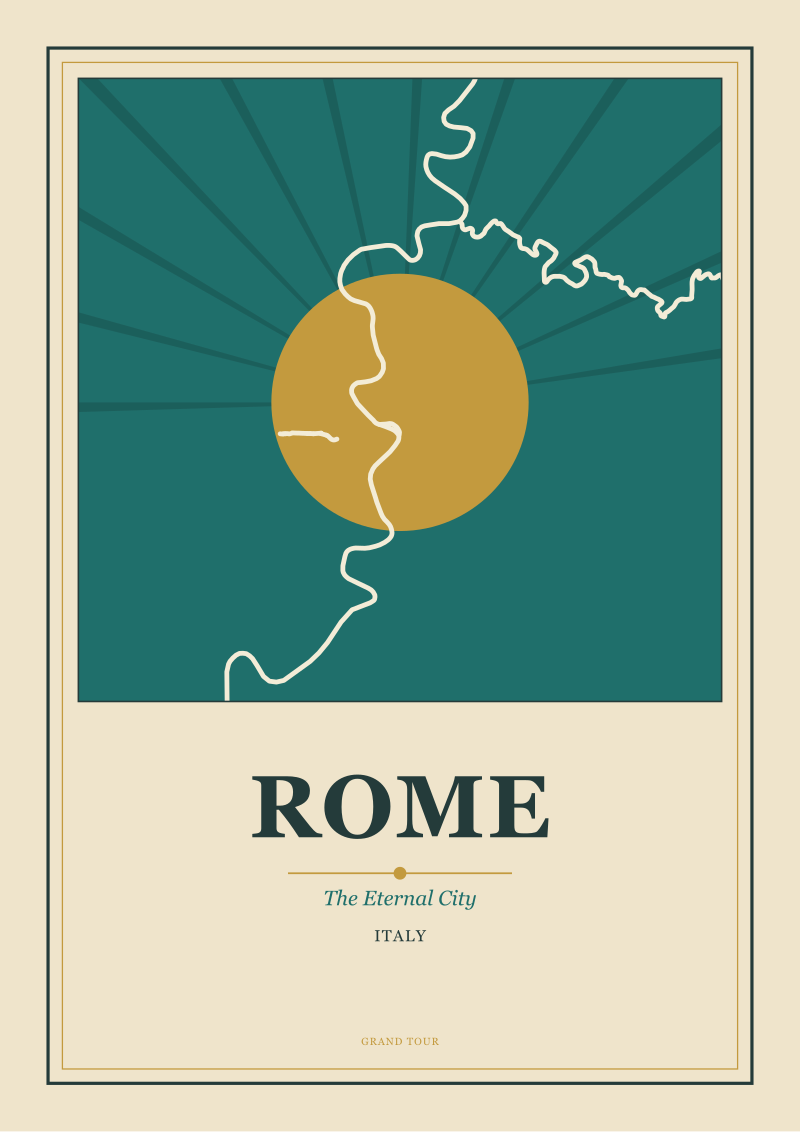
The second error, downstream of the first, is to describe the destinations by what they contained rather than what they meant. Rome, in the standard write-up, has ruins. Naples has an active volcano and, nearby, an excavated Roman city. Venice has painters. This is inventory. It is not analysis. Rome was not visited because it had ruins; it was visited because a specific reading of European civilization located its origin in the Roman Republic, and the young man was there to see the primary sources of the argument. The ruins were the syllabus.
The third error is scale. The Grand Tour is often described as a mass phenomenon. It was not. Even at its peak, the number of Britons undertaking a genuine multi-year Tour was small — the historical estimates vary and none should be quoted as gospel. But the population was dense enough to reshape the visual culture of the destinations it visited, sustain a small industry of tutors and guides, and produce enough demand for portraiture, view painting, and antiquities to remake several European artistic careers. The scale was cultural, not demographic.
The fourth error, when the piece is written by someone with a modern travel sensibility, is to reach for the vocabulary of the "life-changing trip." The Grand Tour was not life-changing in the modern therapeutic sense. It was life-shaping in an administrative one. It produced the class that ran the country. The distinction is not decorative; it is the whole of the subject.
What Is Almost Always Missing
The missing subject is money.
The Grand Tour was expensive in a way that requires description. It was not a matter of a savings account and a summer off. It was funded by the estate, negotiated by letters of credit arranged before departure, and administered by a bear-leader — the term for the accompanying tutor — who also held the purse and, in theory, prevented catastrophic loss at the gaming tables of every major city on the route. The financial architecture of the Tour is a subject in itself, and the standard write-up omits it entirely. Without the letters of credit, the entire apparatus does not exist.
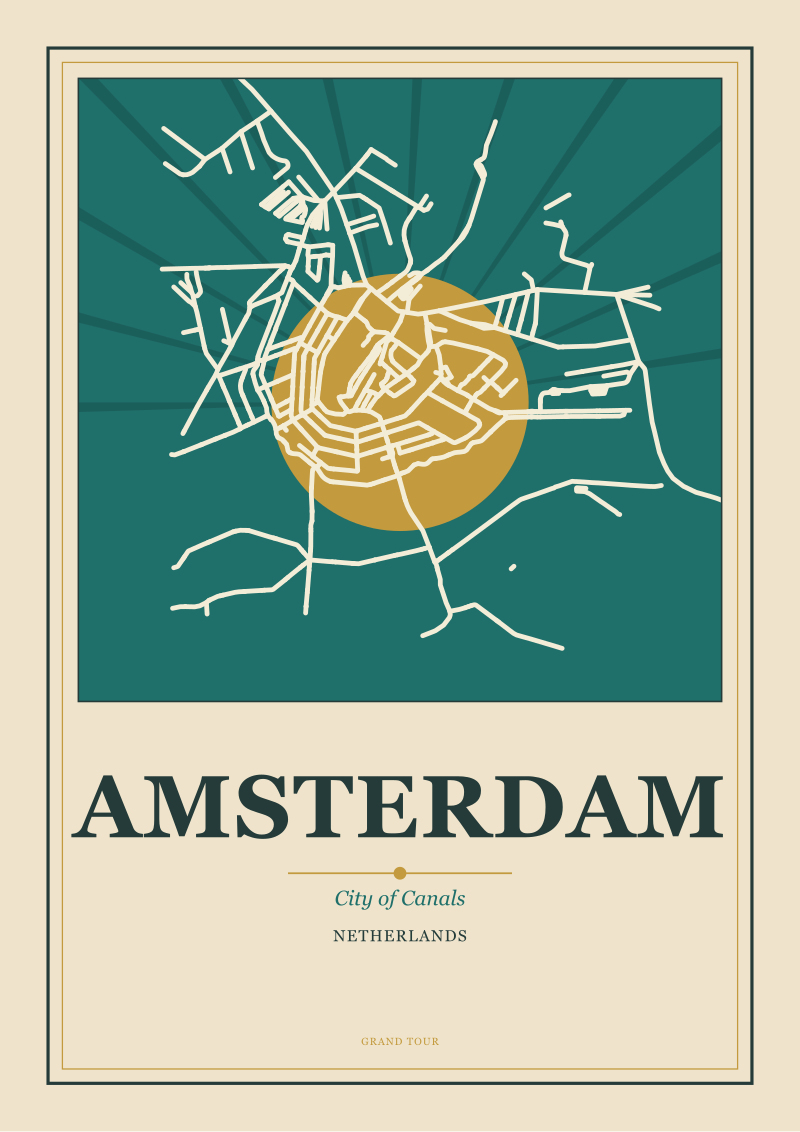
The second missing subject is the geography of return. Coverage tends to move the traveller outward and forget him after Naples. But the Tour was a loop, not a spear thrown south. Returning parties often came home via the Alps, Switzerland, sometimes the German-speaking cities, sometimes the Low Countries — Amsterdam, the City of Canals, appears in numerous return itineraries, and the northern leg is where the Tour's aesthetic centre of gravity was, quietly, being renegotiated. Amsterdam looks nothing like Rome. That contrast is where the Tour began to teach that European civilization was not one place.
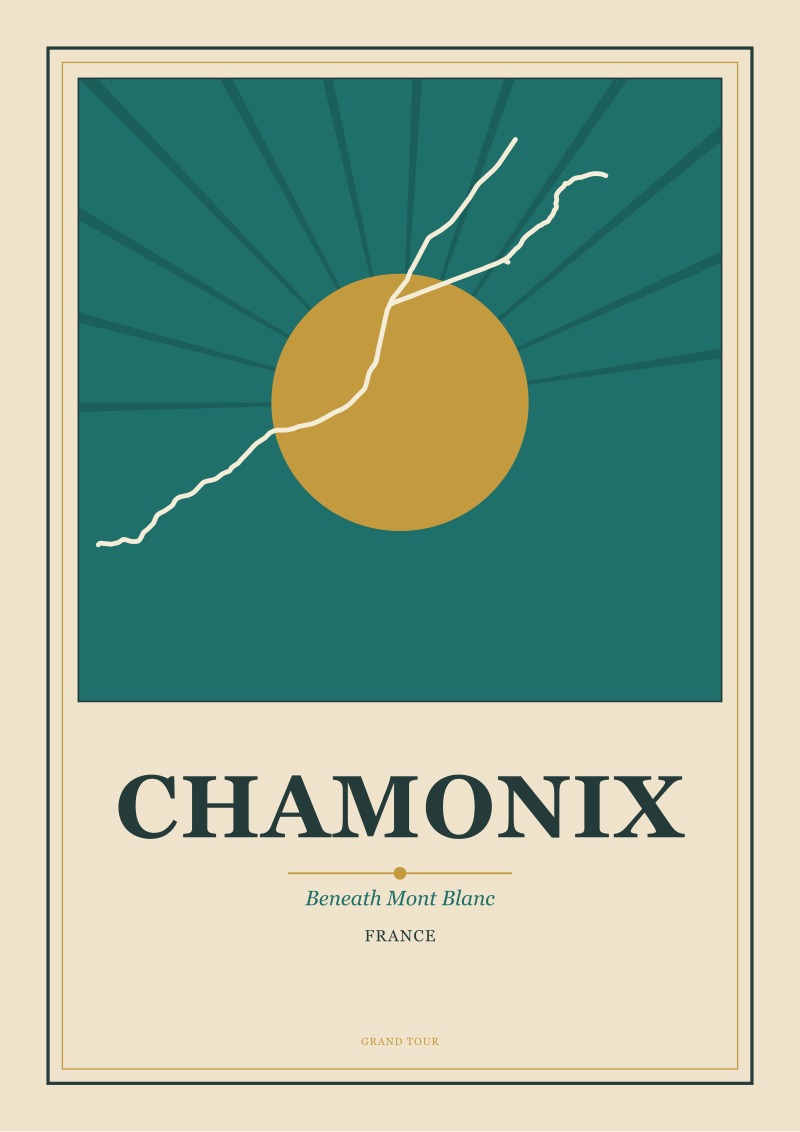
The third missing subject is the Alps themselves. Chamonix, sitting beneath Mont Blanc, is a location that acquired cultural importance during and immediately after the Grand Tour period, when a specific new attitude toward mountains — that they were not obstacles to be crossed with the shutters closed but landscapes worth stopping for — was invented in the writing of returning travellers. The taste for mountain scenery, later industrialised as alpine tourism, is a direct downstream product of Tour-era aesthetics. It is essentially never mentioned in the standard articles about the Tour, because it happens on the way home.
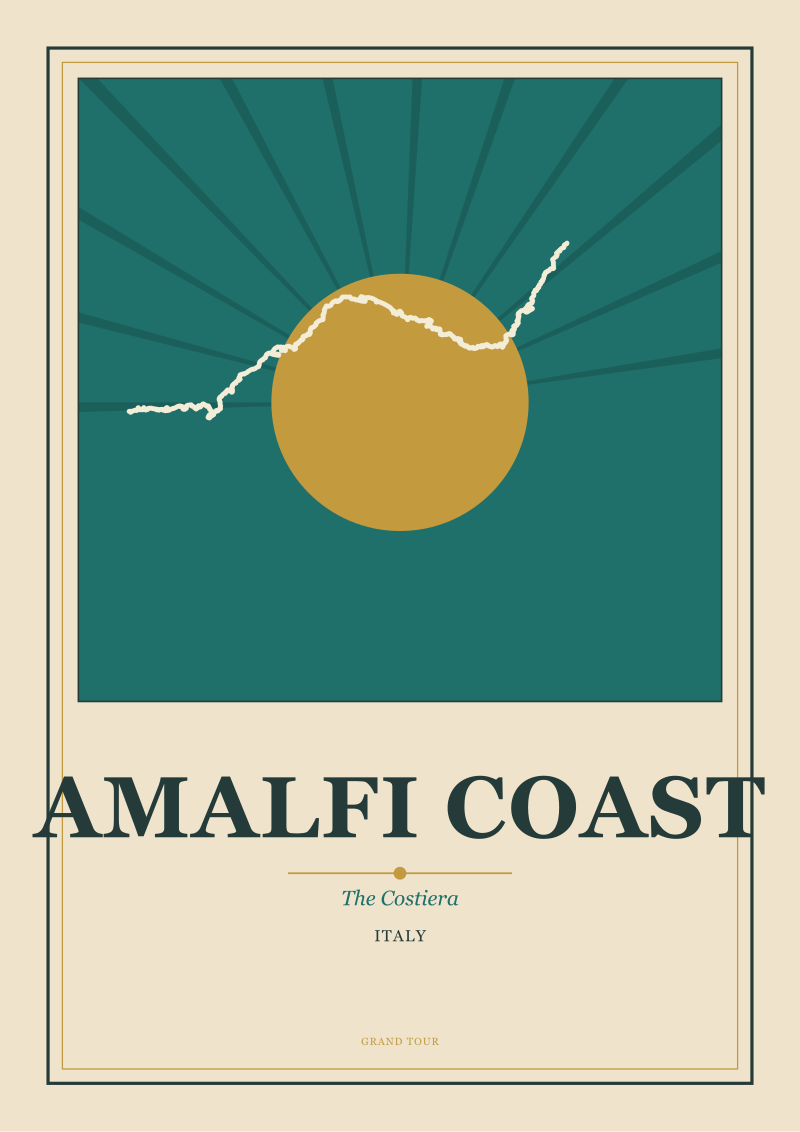
The fourth missing subject is the coastline. The southern terminus of the Tour was Naples, and beyond Naples the Amalfi Coast — the Costiera — formed part of what the traveller saw when he sailed or rode the last leg. That coast entered the visual imagination of Northern Europe through the eyes of Tour-era draughtsmen and their students. A century later, when the railway posters of the twentieth century made the same coast famous a second time, they were re-drawing a view that had already been drawn.
The fifth missing subject is that the Tour ended. It is important to say why, and standard coverage rarely does.
 Amsterdam
The print from this article · from €29.95
View the print →
Amsterdam
The print from this article · from €29.95
View the print →
What I Would Say Instead
The Grand Tour should be described as a curriculum with three subjects and a duration measured in seasons rather than months.
Subject one: the classical past. Rome and its territorial extension — down through Naples, along the Amalfi Coast, back through Florence — was the primary text. The traveller was there to read it in situ: to stand where the events had happened, to sketch what was left, and to acquire, through repetition, the reference set that would allow him to speak about civic virtue, republican decline, and imperial architecture without hesitation for the rest of his life. This is the subject the standard articles cover, badly. They cover it as sightseeing.
Subject two: the modern European city as counter-example. Paris on the outward leg, Amsterdam or the Rhineland on the return, occasionally Vienna. These were living cities, not archaeological ones. They taught the traveller that a functioning capital could be organised around commerce — Amsterdam, laced with the canal grid its epithet describes — or around court, and that the two structures produced different kinds of civilization. Barcelona, which was not on the classic Tour but sat on the Mediterranean that framed the whole enterprise, tells the same story in a different register: a coastline city organised around its port and its language, Northern Europe's counter-image to itself. The subject here was comparative political geography, done on foot.
Subject three: landscape as aesthetic problem. This is the subject that survives the Tour and outlives it. The Alps — Chamonix specifically became the postcard version, beneath Mont Blanc — were the object lesson in the sublime, a category that European aesthetics was in the process of inventing during exactly the period the Tour was operating. The coastlines, the Amalfi curve, the northern seascapes glimpsed from the ship home: these trained an eye that would, generations later, hang paintings of those exact scenes above English mantelpieces and, later still, print them as posters and sell them at railway stations.
The Tour ended when three things converged. The Napoleonic wars closed the routes for a decade and broke institutional continuity. The steam railway replaced the coach and shrank the pedagogical duration into a matter of days. And a growing middle class arrived with money and no need for the specific class-formation function the Tour had served. What replaced it was tourism, in the modern sense — shorter, cheaper, unaccompanied by a tutor, aimed at experience rather than syllabus. The Grand Tour did not survive that transition. Its aesthetic residue did.
That is the article. The itinerary was the container. The curriculum was the content. The visual afterlife — the drawings, the landscape paintings, the eventual posters — is the receipt. If there is a next question, it is what the Tour looked like from the other side: how Rome, Venice, Naples, Amsterdam experienced the two-century arrival of a specific class of foreign student, and what those cities did with the demand. That is where the story continues, and it is not where this piece ends.
FAQ
Who actually went on the Grand Tour?
The Tour was overwhelmingly the province of British aristocratic and upper-gentry men, typically in their late teens to mid-twenties, travelling with a tutor known as a bear-leader. A smaller number of young men from other Northern European countries made comparable journeys, but the term itself is British in origin. Women almost never travelled the Tour in its classical form; the few who did were exceptions written about because they were exceptional. The demographic base was narrow by design.
How long did a full Grand Tour typically last?
The genuine article ran two to four years. Shorter versions existed and became common toward the end of the period, but the pedagogical logic of the Tour — languages absorbed in place, a full artistic season in each principal city, weeks of sitting and sketching — required duration. A six-month version is not a Grand Tour in the historical sense. It is an early example of what tourism would become after the Tour itself had ended, compressed by the railway and the arrival of paying travellers who needed to be back at a desk.
Was the Grand Tour only about Italy?
No. Italy was the intellectual centre of gravity because the classical curriculum lived there, but the Tour typically began in Paris and returned through Switzerland, the German-speaking cities, or the Low Countries. Amsterdam, the City of Canals, appears on many return itineraries. The comparison between the ruined south and the mercantile north was part of the pedagogy. Treating the Tour as an Italy-only phenomenon is one of the most common conventional errors and it removes the entire comparative subject the Tour was designed to teach.
Why did Chamonix and the Alps become important during and after this period?
Chamonix, sitting beneath Mont Blanc, acquired its cultural weight during and just after the Tour period, when European aesthetics was inventing the category of the sublime and applying it to mountain landscape. Alpine scenery had been avoided by earlier travellers, who closed the coach shutters at high passes. Tour-era writing, by contrast, learned to stop and look. Chamonix is the location where that reversal became a habit, then a practice, and eventually the industry we now call alpine tourism.
What did the Amalfi Coast have to do with any of this?
The southern leg of the classical Tour reached Naples, and the Amalfi Coast — the Costiera — was part of what the traveller saw at the end of the road, whether by carriage, on foot, or by boat along the cliffs. Tour-era draughtsmen drew that coastline into the Northern European visual imagination long before the railway poster arrived to redraw it. When twentieth-century travel graphics made the Costiera iconic a second time, they were reworking a view already established by the Grand Tour's sketchbooks.
What actually killed the Grand Tour?
Three overlapping causes. The Napoleonic wars closed continental routes for roughly a decade and broke institutional continuity. The steam railway compressed the coach-era distances into days and eliminated the pedagogical function of duration; a curriculum measured in seasons cannot survive a train timetable. And a growing middle class with disposable income created a different, shorter, unaccompanied model of European travel that did not need the tutor-driven Tour to justify itself. The class function the Tour had served no longer required the format.
Is the modern gap year a descendant of the Grand Tour?
Structurally, no. The gap year is aimed at personal experience and, sometimes, résumé signalling. The Tour was aimed at class formation — the production of a young man equipped to run an estate, sit in Parliament, and patronise the arts on return. The two share a rough demographic (young, monied, before career) and a directional bias toward Europe, but the pedagogical apparatus is gone. The Tour was a curriculum with an itinerary attached. The gap year is an itinerary with the curriculum removed.
 Rome
The print from this article · from €29.95
View the print →
Rome
The print from this article · from €29.95
View the print →
New city prints and 10% off your first order.
One email now with your code. No noise after.