Every December the same thing happens. Someone types "travel poster gift for the Rome lover in my life" into a search bar, lands on a Shopify store selling the same six PNGs the next tab is also selling, and clicks buy at 11pm on the 22nd. The recipient smiles politely on the 25th. The poster ends up behind a door by March. This guide exists because we watch it happen every year, and because most gift guides for travel poster enthusiasts in 2026 are written by people who have never held a lithograph. What follows is a flowchart in prose. Three questions. One table. Answer honestly and you will not send a bad gift.
Question 1: Is the Recipient Buying the Place, or the Poster?
This is the fork most gift guides skip, and it is the one that decides everything downstream. A person who loves Rome and a person who loves travel posters are not the same person. They overlap, but the overlap is smaller than the marketing copy pretends. One wants the Tiber curling past Castel Sant'Angelo on their wall because they walked that bend in October and it undid them. The other wants a poster because they know what a lithograph is, they know which decade produced the language of the modern travel poster, and they will notice — silently, forever — if the thing you sent them is a JPEG stretched to A2 and printed on paper you can see light through.
Ask yourself, honestly, which one you are shopping for. The place-lover cares about the city. The poster-lover cares about the object. Buy for the wrong one and the gift misses by the same distance a wine gift misses when you send a good bottle to someone who only drinks the label.
If Yes — They Love the Place
If the recipient loves Rome the city — the person who has been three times, who reads Roman history for fun, who names their dog Cicero — the gift is about recognition, not connoisseurship. The image needs to be true to the place. The Tiber must curve the right way. The dome of St. Peter's must have the right silhouette against the western sky. The seven hills must be legible as hills, not decorative bumps. The wall art does its job the moment the recipient walks past it and their shoulders drop.
For this reader, geographic fidelity beats aesthetic pedigree. A modern studio poster drawn from real OpenStreetMap geometry is a better gift than a mid-century reprint of a Riviera scene they have no personal connection to. Ask what neighborhood the recipient stayed in. Ask which river bend they crossed on foot. That is the poster. Not the generic Colosseum silhouette everyone sells because it prints well on tote bags.
If No — They Love the Poster
If the recipient is the poster-lover — the person who can tell you the difference between a lithograph and an offset print, who owns at least one book about the golden age of railway posters, who will turn the print over to check the paper weight before saying thank you — then Rome may not even be the right city. The gift is about the medium and the tradition. It is about the idea that a place can be reduced to essential lines and flat color and made more true, not less. For this recipient, a well-executed Naples or Trieste can land harder than a competent Rome, because they already have a Rome. They do not need another one that sells because it sells.
Question 2: Does Rome Belong in This Gift, or Are You Defaulting to It?
Rome is the query. Rome is not necessarily the answer. Rome sells more posters than any other Italian city because Rome is the city that people who have never been to Italy know they are supposed to want. It is the safe search. This is a problem for gift-buying because the recipient who actually loves travel posters almost certainly already owns at least one Rome. Sometimes several. Sending them a seventh Colosseum is not thoughtful — it is defaulting, and they will read it as defaulting, whether or not they say so.
The Eternal City is the eternal city because everyone paints it. This is also why it is the hardest city to gift well. A serious poster of Rome must earn its place next to the six other serious posters of Rome the recipient may already own. That is a high bar. Ask yourself whether you are choosing Rome because it fits the recipient, or because your search bar led you there.
If Yes — Rome Is the Right Choice
Rome earns its place in the gift when the recipient has a specific relationship to it that no other city can fill. They lived a year in Trastevere. They proposed on the Aventine. Their mother is Roman. Their PhD is on Bernini. In these cases, Rome is not a default — it is a signature, and the poster becomes a portrait of a personal fact rather than a decorative shorthand for Italy.
If you are here, the work becomes selection. The city offers at least four legitimate poster angles: the river, the seven hills as a topographic study, the dome of St. Peter's from across the Tiber, the aqueduct lines fanning east into the Campagna. Choose the one that maps to the recipient's specific memory. The Colosseum, for what it is worth, is the least personal of the options. It is the one every tourist buys. A river bend they walked is better than a monument they photographed.
If No — Consider Rome as an Anchor, Not the Whole Gift
If you paused on this question and realized Rome was the default rather than the fit, this is the branch to take seriously. The move here is to give Rome as an anchor and pair it with a second city that says you were paying attention. This is what "and beyond" in the query title actually means in practice. It is not about a set of ten posters bundled at a discount. It is about a pairing.
A pairing works when the second city is chosen for the recipient, not for you. If they honeymooned in Rome and then took the train to Naples, the pair is Rome and Naples. If they lived in Rome as an exchange student and now live in Lisbon, the pair is Rome and Lisbon. The pairing is a sentence. Two posters together tell a story a single Rome cannot.
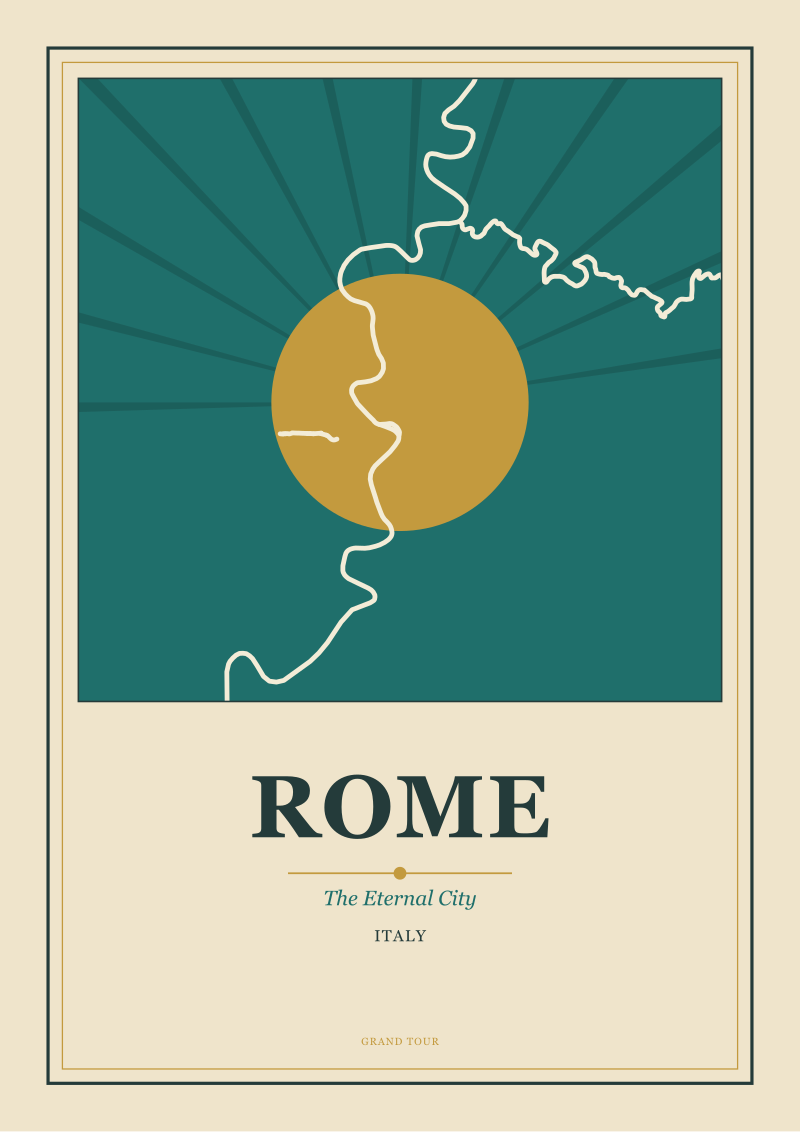 Rome
The print from this article · from €29.95
View the print →
Rome
The print from this article · from €29.95
View the print →
Question 3: Are You Willing to Verify What You Are Actually Sending?
This is the survival question. Answer it wrong and everything above collapses. The travel poster market in 2026 is a shell game. A significant portion of what shows up in the first page of any search is drop-shipped from print-on-demand farms that have taken a public-domain scan, upscaled it with AI, and layered a fake studio name across the bottom. The listing looks like a real studio. The product page does not tell you what paper it is printed on, what the source file is, or who drew it. The recipient will notice. Poster-lovers notice paper the way sommeliers notice cork.
Verification is not glamorous. It is the difference between a gift that survives ten years on a wall and a gift that survives one dinner-party appraisal. If you are not willing to do the checks below, downgrade the gift — a book about the golden age of railway posters costs less, requires no verification, and never disappoints.
If Yes — Here Is What to Check
Four checks, in order.
First, look for a source file description. A real studio will tell you the geometry came from OpenStreetMap, or that the illustration was drawn from a specific historical map, or that the print is a re-issue of a documented original with the archive reference cited. A print-on-demand shop will describe the image in adjectives ("vibrant", "vintage-inspired", "beautifully detailed") and nothing else.
Second, check paper weight and finish. The minimum for a poster you want on a wall for a decade is 200 gsm. Museum-grade uncoated ranges from 240 to 310 gsm. If the product page does not list weight in grams per square metre, assume the answer is bad. Real print studios list this by reflex.
Third, look for a signed artist name or a studio credit that leads somewhere. Not a logo pasted at the bottom of a stock image. A name you can search, whose portfolio you can see, whose other work matches the visual language of the poster you are buying.
Fourth, read the return window. Serious studios offer 30 days minimum on undamaged prints because they know their product survives inspection. Fourteen-day windows on posters are a red flag. Seven-day windows are a confession.
If No — The Book, the Gift Card, or Nothing
If you are not going to do those four checks, do not gamble. There are three honest fallbacks. A monograph on Cassandre, Roger Broders, or the general history of the twentieth-century railway poster is £30 to £50 and will genuinely delight a poster-lover in a way a bad print will not. A gift card to a studio the recipient can choose from — with the recipient's involvement in the choice — is unromantic but factually a better outcome than a wrong poster. And doing nothing at all, and giving something else entirely, is better than giving a print the recipient will quietly move to the guest bathroom.
The worst outcome in this whole guide is the poster that hangs for a month, gets taken down when the recipient's poster-collector friend comes over, and never goes back up. That is a specific kind of gift failure and it is entirely avoidable.
If You Answered Everything: The Decision Table
Read your three answers across the row. The recommendation in the last column is the one honest sentence this guide has for that combination.
| Q1: Place or Poster? | Q2: Rome the fit? | Q3: Will you verify? | Recommendation |
|---|---|---|---|
| Place | Yes | Yes | Buy one Rome print drawn from real geometry, matched to the specific neighborhood or river bend they know. |
| Place | Yes | No | Buy a hardcover book on Rome's visual history instead; skip the poster market entirely this year. |
| Place | No | Yes | Buy a pair: one Rome, one city with genuine personal weight for them. Two prints, one story. |
| Place | No | No | Skip the poster. A framed personal photograph from their trip, printed properly, beats any generic city print. |
| Poster | Yes | Yes | Buy a serious Rome — river-and-dome or aqueduct study — from a studio whose paper and source you have verified. |
| Poster | Yes | No | Buy a monograph on Cassandre or Broders instead; do not risk a bad print on someone who will notice. |
| Poster | No | Yes | Skip Rome. Pick a less-drawn Italian city (Trieste, Genoa, Naples) or move to France. Verify as above. |
| Poster | No | No | Give a gift card to a studio they already follow, or a book. Do not guess in the drop-ship jungle. |
The table is deliberately blunt. Five of the eight rows recommend against buying a poster in the drop-ship market, and that is not a mistake. A gift-buying guide that recommends buying in every scenario is not a guide, it is a funnel.
If your row landed on a poster recommendation, the studio behind this guide draws European cities from real OpenStreetMap geometry and prints on 240 gsm uncoated. The shop is where those live. If your row landed on a book or a gift card, the recommendation still stands — the honest answer this year matters more than the sale.
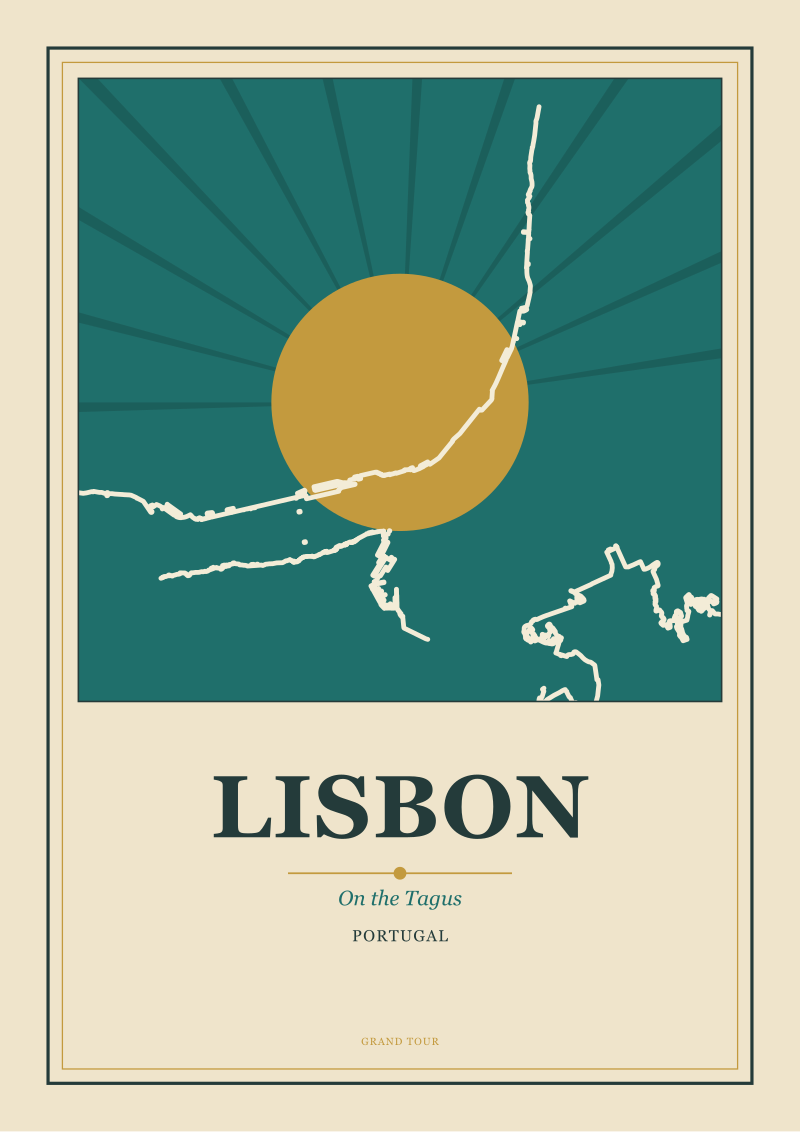 Lisbon
The print from this article · from €29.95
View the print →
Lisbon
The print from this article · from €29.95
View the print →
FAQ
How can I tell if a travel poster listing is a drop-shipped AI upscale?
Look for four absences. No paper weight in grams per square metre. No named artist or studio with a searchable portfolio. No source description for the image (real studios cite geometry, historical maps, or archive references). And a return window under 30 days. If three of those four are missing, the listing is almost certainly a print-on-demand pass-through. The image itself may look fine at thumbnail size and fall apart at A2.
Is Rome always the right choice for a Rome lover in 2026?
No, and this is the trap. Rome-lovers who are also poster-collectors likely already own multiple Rome prints, because Rome is the default that every studio and every drop-shipper produces first. A pairing — Rome anchored with a second city that has personal weight for the recipient — reads as considered. A seventh Colosseum reads as a search-bar default. Ask what other cities they have a real relationship with before locking in.
What paper weight should a serious travel poster be printed on?
The functional minimum for wall art meant to last a decade is 200 gsm. Studios producing what they describe as archival or museum-grade prints typically use uncoated stock between 240 and 310 gsm. Weight alone is not everything — the surface finish and the ink system matter — but weight is the single number you can filter listings on. Anything under 170 gsm is closer to a magazine page than a poster.
Is a mid-century reprint better than a modern studio print?
Not automatically. A well-produced modern print drawn from real geographic data on 240 gsm uncoated can outperform a mediocre reprint of a Roger Broders on thin paper. The reprint carries historical pedigree, but pedigree without production quality yields a disappointing object. Ask which specific archive the reprint sources, what paper it is printed on, and whether the print run is limited. Vague answers are answers.
What's a good gift budget for a real travel poster in 2026?
For a single unframed A2 print from a working studio with cited sources and 240 gsm paper, expect £45 to £90. Under £30 and you are almost certainly in drop-ship territory. Framed and matted, add £60 to £150 depending on frame quality. A pair of two prints from a serious studio, framed, sits between £250 and £400. Anything advertised as a "premium travel poster" for £15 is a warning label, not a bargain.
Should I frame the poster before gifting it?
Only if you know the recipient's frame vocabulary. A poster-lover who owns matched black frames throughout their flat will be irritated to receive a print in an unmatched oak frame they now have to swap. A place-lover with no strong framing preference will appreciate the completed object. When in doubt, send the print unframed with a note that you can add framing on their terms. It is the more useful gesture, even if it looks less finished under the tree.
What are honest alternatives to a poster for someone hard to shop for?
Three that work reliably. A hardcover monograph on the golden age of the railway poster (Cassandre, Broders, and the wider mid-century movement are all well-documented). A print of a specific personal photograph from a trip the recipient took, printed on decent paper and framed properly, which almost no one thinks to do. And a studio gift card involving the recipient in the final choice — unromantic but factually the highest-hit-rate outcome for a poster-lover you are unsure about.
Where does "and beyond" in the query title actually lead?
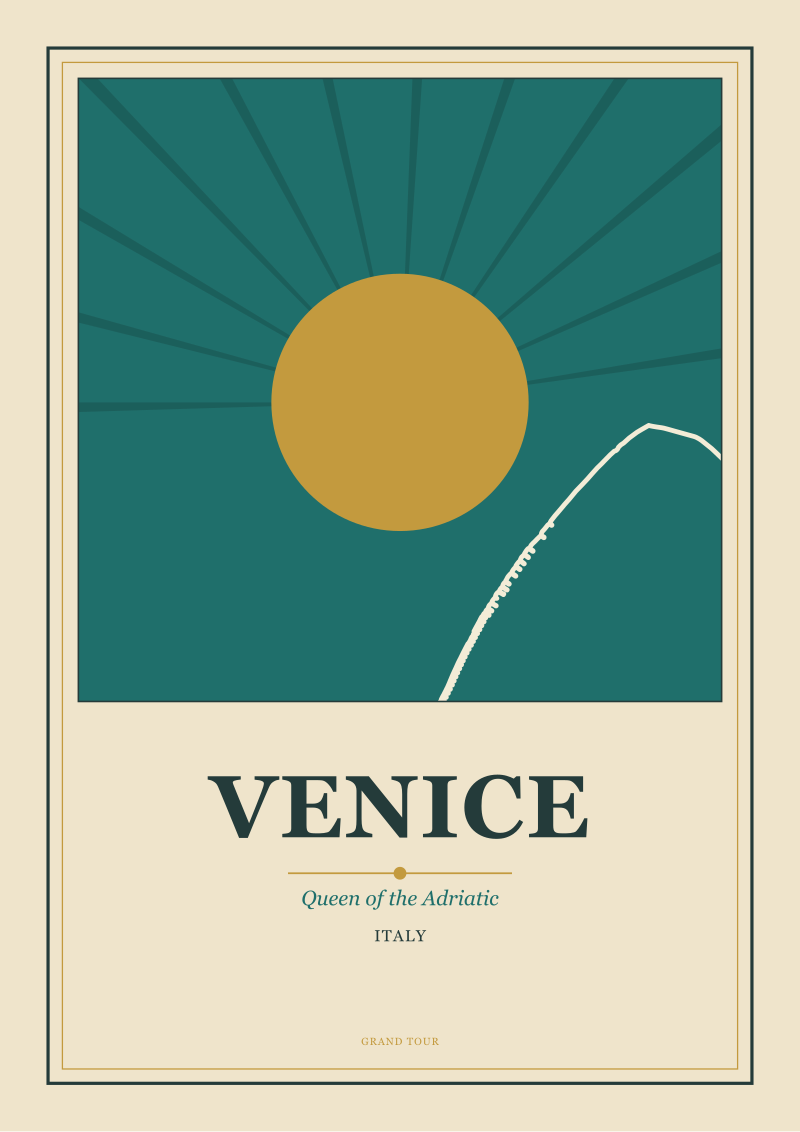
It leads to the pairing move. "Rome and beyond" is the search bar's way of asking for a set, and the honest answer is not a discounted ten-poster bundle — it is one Rome plus one carefully chosen second city that has meaning for the recipient. Naples if they took the coastal train south. Venice if they came in by rail from the north. Lisbon or Athens or Istanbul if their relationship with Rome is really a relationship with the wider Mediterranean. Two prints, one sentence.
New city prints and 10% off your first order.
One email now with your code. No noise after.